

Category

PAUSE FOR THOUGH

Pause for thought – friendship

Friendship


What a beautiful thing friendship is.


In the autumn of 1966, I met a chap called William King at St Luke’s College, Exeter. Kindred spirits we were, and have remained the best of friends ever since. Our faith is a common denominator, as is our love of music and the natural world. We all have a similar experience of ties made with others, and the wonderful thing in today’s Gospel is that Jesus calls his followers friends.

An old adage states that friends are ‘the family we choose’. Jesus here is calling ‘friends’ – chosen and appointed to join Him in witnessing to the Kingdom.

Unlike servants, friends don’t merely follow orders but put themselves out for one another, and enjoy spending time in each other’s company, As part of this friendship with Him, Jesus commands us to love one another, reflecting the love that God has for Jesus and that Jesus has for us. This mutual love releases joy, and the ability to act sacrificially, encouraging others into a lasting relationship with the Father.


….and Jesus I have promised to serve thee to the end:
O give me grace to follow
my Master and my Friend.


John Marsden
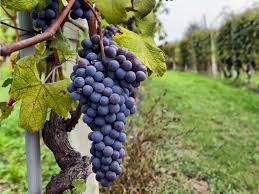
Pause for thought – the Vine and the Vinegrower

The Vine and the Vine-Grower

I was pondering a new hobby – owning a vineyard! Sell some wine, drink some stock, make some money! However, it’s not that simple.

Grapevines take great care and time.  It takes three years to produce fruit, even six with some.   Vines should be pruned and trained to grow along a trellis or wires.
Vines grow best in the dirt that other plants dislike; rocky hillsides with low yielding soils.  It takes many vines to make one good bottle of wine.  It’s expensive to start a vineyard and takes many years before the owner sees a return on their investment.  Suddenly, it’s not so attractive!

Is it unusual then, that something so difficult would be the example Jesus used when talking about the relationship between God and His people?

Not really, because these are the perfect type of fields to demonstrate God’s relationship with His kingdom.

Think about it:

We’re difficult to tend.  We’re like that low yielding soil, full of rocks and like a steep hillside .We take careful pruning and time before we produce good fruit.  We’re costly.

Despite this God, the faithful vineyard owner, cares for us lovingly and with patience. He works the soil and prunes us, the branches intertwined with the vine itself that is Jesus, perfectly to produce fruit for the kingdom.

Revd. Neil Redeyoff,

Rector of The Parish of Holy Trinity and St Oswald’s, Finningley, with St Saviour’s, Auckley

A Gospel reflection – The Good Shepherd

The Good Shepherd


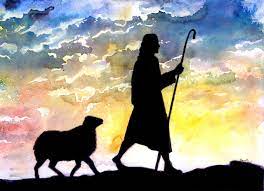
As we begin to move on from the Easter narrative we have this wonderful image of Christ as the Good Shepherd.

With all the programmes on farms and the countryside we’ve had on television recently, and the knowledge that we have lambs being born locally, it is not difficult to appreciate the wonder of new life and the care that is taken with the livestock. Total commitment. On call 24 hours a day. Facing all the challenges new life brings. So it is for a good job to be done with this profession and within any sphere.

So, Jesus demonstrates His love for His ‘flock’ by giving His life. ‘Greater love hath no man….’ He is always looking for bringing in other ‘sheep’ who recognize His call and is prepared to die so that the flock may remain secure. Our Lord compares this calling with the hired hand who is only into shepherding for the money and lacks loyalty, running away at the first sign of danger. Under the hired hand the flock is in jeopardy from wolves. Under the good shepherd, the sheep bask in the reflected love of their Creator, offered to them by the Son.

John Marsden

A Gospel reflection for after Easter

A Gospel Reflection


After all the pathos and drama of the Passion of Our Lord, and the excitement of His Resurrection we have the intimate narrative of Christ’s meeting with the disciples. It’s almost as if the dust was beginning to settle after a period of intense activity, or bits of the jigsaw were starting to fit into place after the jumbled chaos.

As the lockdown changes to greater freedoms so we begin to reconstruct as if building a new jigsaw. Next week sees the recommencement of the 10.30 am. Service in church ( with the same guidelines as previously ). Hopefully we would be more able to begin emerging and reconnecting with life in general.

Today we find the disciples fearfully together behind locked doors. Alone. Confused. Waiting. And the risen Jesus speaks with reassuring words, “Peace be with you.” Their Lord, and ours, breathes the Holy Spirit into them, bringing courage and hope for their futures.

The absent Thomas struggles to grasp what has happened. When Jesus appears for the second time the crucifixion scars convince Thomas, who makes a huge leap of faith declaring, “ My Lord and my God.” He had seen the light. Many of us have spoken about being able to see the light at the end of the tunnel as the vaccine rolls out and also infections fall. So the risen Christ brings peace to us too as we lean on the knowledge of God’s goodness to His creation, intimately concerned for each and every individual.

John Marsden

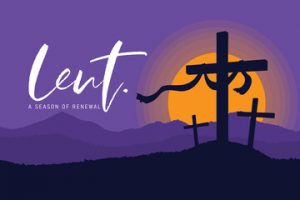
A Lent reflection – Restoration and Joy through Repentance

Restoration and Joy through Repentance

The author of this Sunday’s psalm (Psalm 51) was probably writing about 600 years before Jesus was born and 1000 years before the season of Lent was fully established within the Church. Nevertheless the writer fully understood the Lenten theme of repentance in the presence of God. He seems to be laying open his guilt rather dramatically: “I have been wicked even from my birth”. Tradition portrays King David as the author of this psalm, giving his meditation after he had acquired another man’s wife and then murdered that man. This would certainly explain an expression of profound guilt . Here is reassurance that all and every sin can be repented of, if we truly have a change of heart and outlook as a result. Our own sins may appear more understandable and forgivable in God’s sight, than the sins that other people commit. But all sin requires repentance, and Jesus points out our tendency to see our brother’s or sister’s speck in their eye, past the log of sin in our own. We take stock of our lives especially during Lent so we can ultimately achieve what the ancient psalmist wished to: Restoration and Joy. We pray for “again the joy of your salvation” through a return to God’s presence. We yearn for a time when our combined tongues more fully “will declare your praise”.

John Hosker

A Lent Reflection – 8 March 2021

Jeremiah 38: the Mud-Tank, the Pandemic and God’s faithfulness.
What could the longest and most depressing book in the Bible possibly have to say to us today?

Given the times we are living through (and starting to emerge from), it is hardly surprising that this story in Jeremiah 38 (from this Sunday’s Morning Prayer readings) is able to speak to us across 26 centuries. Jerusalem is under threat by the Babylonians, is about to fall and its people taken into exile. Jeremiah’s unwelcome advice to the failing leaders of Jerusalem results in him being put in a cistern full of mud so he would starve to death.

This is a story of Jeremiah’s world & country falling apart around him. It is a story of Jeremiah having to contemplate his own death in a dark and entirely isolated setting. It is also the story of the current pandemic and our own feelings of abandonment by God. However, Jeremiah is rescued from his gloomy isolation in the cistern by someone filled with God’s compassion, and the country ultimately returns out of exile in Babylon to restore the city and the nation.

This is a story of hope-in-adversity for ourselves, our closest ones and our world, based on God’s great faithfulness. Praise the Lord!

John Hosker