

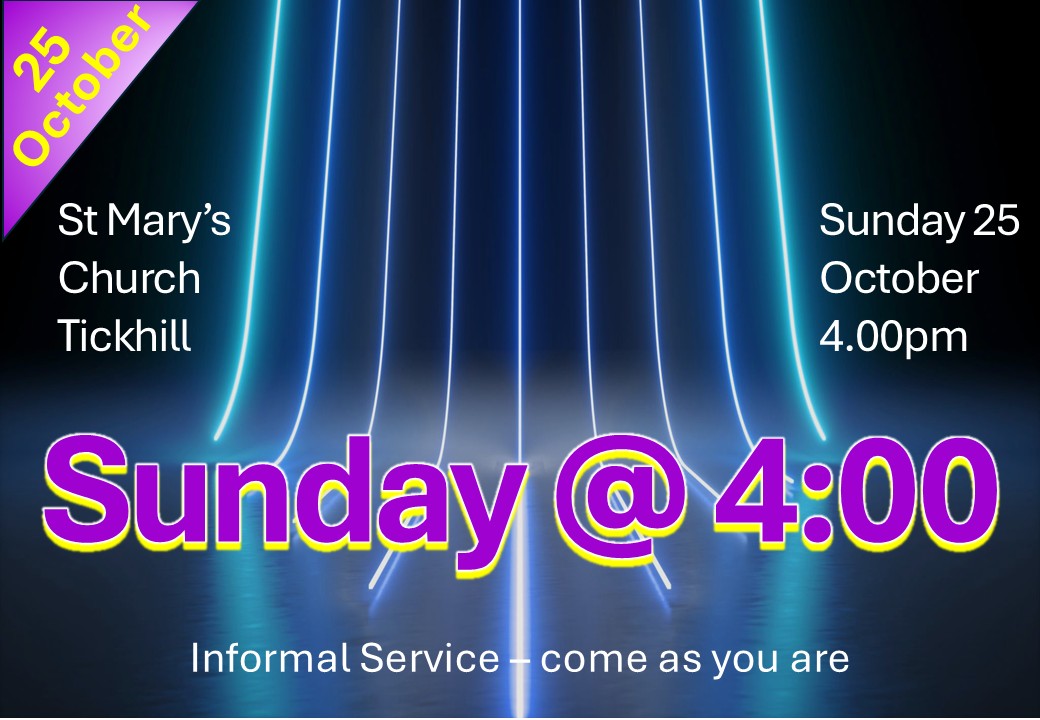
4.00pm – Sunday 1 November ‘Church Done Differently’ Light Party

 A Living Churchyard
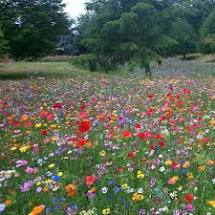
The PCC has agreed that, as a trial this year, an area of grass in the south-west corner of the churchyard will not be cut, to encourage the myriad of wildflowers that grow there and the benefits to wildlife that follow.
So far there have been primroses and speedwell as well as the usual profusion of daisies and dandelions, so watch that space!

 Friendship
What a beautiful thing friendship is.
In the autumn of 1966, I met a chap called William King at St Luke’s College, Exeter. Kindred spirits we were, and have remained the best of friends ever since. Our faith is a common denominator, as is our love of music and the natural world. We all have a similar experience of ties made with others, and the wonderful thing in today’s Gospel is that Jesus calls his followers friends.
An old adage states that friends are ‘the family we choose’. Jesus here is calling ‘friends’ – chosen and appointed to join Him in witnessing to the Kingdom.
Unlike servants, friends don’t merely follow orders but put themselves out for one another, and enjoy spending time in each other’s company, As part of this friendship with Him, Jesus commands us to love one another, reflecting the love that God has for Jesus and that Jesus has for us. This mutual love releases joy, and the ability to act sacrificially, encouraging others into a lasting relationship with the Father.
….and Jesus I have promised to serve thee to the end:
O give me grace to follow
my Master and my Friend.
John Marsden
 The Vine and the Vine-Grower
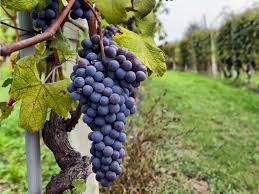
I was pondering a new hobby – owning a vineyard! Sell some wine, drink some stock, make some money! However, it’s not that simple.
Grapevines take great care and time. It takes three years to produce fruit, even six with some. Vines should be pruned and trained to grow along a trellis or wires.
Vines grow best in the dirt that other plants dislike; rocky hillsides with low yielding soils. It takes many vines to make one good bottle of wine. It’s expensive to start a vineyard and takes many years before the owner sees a return on their investment. Suddenly, it’s not so attractive!
Is it unusual then, that something so difficult would be the example Jesus used when talking about the relationship between God and His people?
Not really, because these are the perfect type of fields to demonstrate God’s relationship with His kingdom.
Think about it:
We’re difficult to tend. We’re like that low yielding soil, full of rocks and like a steep hillside .We take careful pruning and time before we produce good fruit. We’re costly.
Despite this God, the faithful vineyard owner, cares for us lovingly and with patience. He works the soil and prunes us, the branches intertwined with the vine itself that is Jesus, perfectly to produce fruit for the kingdom.
Revd. Neil Redeyoff,
Rector of The Parish of Holy Trinity and St Oswald’s, Finningley, with St Saviour’s, Auckley
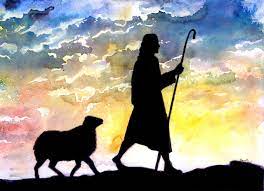
As we begin to move on from the Easter narrative we have this wonderful image of Christ as the Good Shepherd.
With all the programmes on farms and the countryside we’ve had on television recently, and the knowledge that we have lambs being born locally, it is not difficult to appreciate the wonder of new life and the care that is taken with the livestock. Total commitment. On call 24 hours a day. Facing all the challenges new life brings. So it is for a good job to be done with this profession and within any sphere.
So, Jesus demonstrates His love for His ‘flock’ by giving His life. ‘Greater love hath no man….’ He is always looking for bringing in other ‘sheep’ who recognize His call and is prepared to die so that the flock may remain secure. Our Lord compares this calling with the hired hand who is only into shepherding for the money and lacks loyalty, running away at the first sign of danger. Under the hired hand the flock is in jeopardy from wolves. Under the good shepherd, the sheep bask in the reflected love of their Creator, offered to them by the Son.
John Marsden
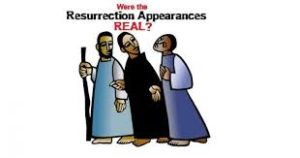 A Gospel reflection – the appearance of Jesus after Resurrection
Today’s gospel reading describes one of Jesus’ appearances after the resurrection. How was he greeted? Not with the intense joy we might expect; the gathered disciples were ‘terrified and amazed’. We have to forget two millennia of Christianity and get into the minds of those present. It is unsurprising that all the gospels describe the initial disbelief of those who first encountered the risen Christ,
To gain some understanding we need to recognise the Jesus’ resurrection was something totally new and different from the resuscitation of Lazarus and the boy from Nain. Jesus’ earthly body had been buried. The resurrected Jesus had been transposed into the glory of heaven.
St.Paul (in 1 Cor.15) describes this as four changes:
What is sown is perishable, what is raised is imperishable,
What is sown is contemptible, what is raised is glorious,
What is sown is weak, what is raised is strong,
What is on earth a natural body, what is raised is a spiritual body.
We can’t visualise this difference any more than those disciples could immediately understand what stood before their eyes. But, in this Easter season we can add our gratitude for all that God did and does through Jesus.
John Hoare
 A Gospel Reflection
After all the pathos and drama of the Passion of Our Lord, and the excitement of His Resurrection we have the intimate narrative of Christ’s meeting with the disciples. It’s almost as if the dust was beginning to settle after a period of intense activity, or bits of the jigsaw were starting to fit into place after the jumbled chaos.
As the lockdown changes to greater freedoms so we begin to reconstruct as if building a new jigsaw. Next week sees the recommencement of the 10.30 am. Service in church ( with the same guidelines as previously ). Hopefully we would be more able to begin emerging and reconnecting with life in general.
Today we find the disciples fearfully together behind locked doors. Alone. Confused. Waiting. And the risen Jesus speaks with reassuring words, “Peace be with you.” Their Lord, and ours, breathes the Holy Spirit into them, bringing courage and hope for their futures.
The absent Thomas struggles to grasp what has happened. When Jesus appears for the second time the crucifixion scars convince Thomas, who makes a huge leap of faith declaring, “ My Lord and my God.” He had seen the light. Many of us have spoken about being able to see the light at the end of the tunnel as the vaccine rolls out and also infections fall. So the risen Christ brings peace to us too as we lean on the knowledge of God’s goodness to His creation, intimately concerned for each and every individual.
John Marsden
The Rev. Canon Ian Smith, Area Dean of West Doncaster, writes
Do you have a favourite Easter hymn or song? If you do could you look it up and read the words please? We are possibly first attracted by the tune it has or an association of the hymn with a place or people special to us. But it may be the words and the combination of tune, people and place. It is so for me.
‘This joyful Eastertide’ was introduced to me in Woking in my very happy second curacy. Oh, getting the twiddly bits right was demanding but then the tune was one I could hum. Written in 1894, its words repeat ancient Christian truths; ‘Had Christ, who once was slain, ne’er burst his three-day prison, our faith had been in vain’ is virtually a copy of 1 Corinthians 15 verse 14.
The other verses remind me I can rest and die in a sure hope because of Jesus and his victory over death; that I should have no more to do with sin because of his resurrection and that the amazing truth, that ‘now hath Christ arisen’, can be repeated in the chorus, louder and louder. What Easter hymn do you like most and why? What does it teach you?
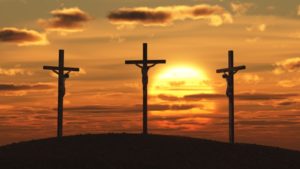 Good Friday 2nd April – 2.00pm – 3.00pm
Join us for an hour of devotional meditation and music for Good Friday streamed on Zoom. Here is the link –
https://us02web.zoom.us/j/84564061695? pwd=dzBzbVYxb2dvc2tqMmtiVFR5TFVlUT09
Meeting ID: 845 6406 1695 – Passcode: 146048
For a copy of the simple service booklet, please click here.
 The Donkey and the Palm Leaves
This Sunday we celebrate Palm Sunday and remember Jesus riding into Jerusalem on a donkey. This image is rich in symbolism and meaning, exactly as Jesus intended. Jesus knew he was fulfilling the prophecy of Zechariah, ‘Lo your king comes to you, triumphant and victorious is he, humble and riding on a donkey’. The donkey is an animal of peace, as opposed to a horse which was ridden in warfare, and in fulfilling this prophecy Jesus announces that his Kingship is one of peace. The meaning of the palm leaves comes from Leviticus when the Jewish people were told to celebrate their Exodus from Egypt by making booths from palm leaves.
We do not know what the crowds around Jesus on that day thought. The Gospels tell us that for much of his ministry Jesus kept his identity as the Son of God hidden and that even his close companions the disciples did not understand who he was until after his death and resurrection.
We know that we now can stand at the gates of Jerusalem holding our palm crosses ready to lay them in Jesus’ path as he rides before us. We can acknowledge him as the Prince of Peace, leading a new Exodus and bringing about our salvation as the people of God.
Jenny Hosker
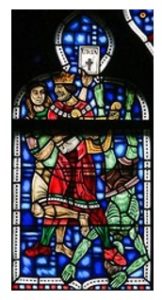
The author of this Sunday’s psalm (Psalm 51) was probably writing about 600 years before Jesus was born and 1000 years before the season of Lent was fully established within the Church. Nevertheless the writer fully understood the Lenten theme of repentance in the presence of God. He seems to be laying open his guilt rather dramatically: “I have been wicked even from my birth”. Tradition portrays King David as the author of this psalm, giving his meditation after he had acquired another man’s wife and then murdered that man. This would certainly explain an expression of profound guilt . Here is reassurance that all and every sin can be repented of, if we truly have a change of heart and outlook as a result. Our own sins may appear more understandable and forgivable in God’s sight, than the sins that other people commit. But all sin requires repentance, and Jesus points out our tendency to see our brother’s or sister’s speck in their eye, past the log of sin in our own. We take stock of our lives especially during Lent so we can ultimately achieve what the ancient psalmist wished to: Restoration and Joy. We pray for “again the joy of your salvation” through a return to God’s presence. We yearn for a time when our combined tongues more fully “will declare your praise”.
John Hosker
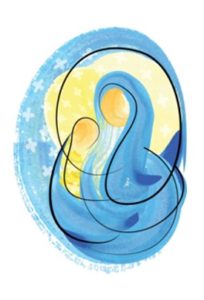
This year we will all reflect on how the pandemic has made us realise how much we each depend on those who love and care for us.
We have all seen significant changes to women’s working patterns and child rearing in recent years. Now we expect a much more equal partnership role with both parents involved in caring for children and the home and women typically combining paid work with mothering. This completely accords with how the Bible understands love, relationships, and parenting. The Bible understands how deeply God loves all of humankind and this reaches its culmination in Jesus tell- ing us talk to God as a parent. In 1 John 1 we are told, “God is love and those who live in love live in God, and he in them”. Despite all the dysfunctional relationships in the Old Testament, the role of mothers is honoured: Sarah the mother who waited for her son Isaac, Naomi the mother who shared her faith with Obed, Hannah the mother who kept her promise to God and brought up Samuel to be a priest. In the New Testament, Elizabeth believed in miracles and brought up John the Baptist. Our beloved Mary is “blessed amongst women”.
Let us rejoice in mothering and all the many ways that mothers change the world through the way they bring up their children.
Jenny Hosker

The Covid-19 Exit Roadmap is helping St Mary’s church plan its reopening.
After timeless weeks of lockdown, green shoots finally appear, the first step on our journey to open the doors and welcome you for public worship. Providing ‘Step 2’ of the Covid-19 Roadmap is favourably met on 12th April, reopening will then commence on Sunday, 18th April with a service of Holy Communion at 10.30*. Please make this a date for your diary.
Precautionary ‘Hands, Face, Space’ measures will be in place for your safety and up to date information is always available on our website at www.stmaryschurchtickhill.com or by calling the PCC Secretary on 751396.
* The church capacity during Covid-19 restrictions is for 60 people.
 Jeremiah 38: the Mud-Tank, the Pandemic and God’s faithfulness.
What could the longest and most depressing book in the Bible possibly have to say to us today?
Given the times we are living through (and starting to emerge from), it is hardly surprising that this story in Jeremiah 38 (from this Sunday’s Morning Prayer readings) is able to speak to us across 26 centuries. Jerusalem is under threat by the Babylonians, is about to fall and its people taken into exile. Jeremiah’s unwelcome advice to the failing leaders of Jerusalem results in him being put in a cistern full of mud so he would starve to death.
This is a story of Jeremiah’s world & country falling apart around him. It is a story of Jeremiah having to contemplate his own death in a dark and entirely isolated setting. It is also the story of the current pandemic and our own feelings of abandonment by God. However, Jeremiah is rescued from his gloomy isolation in the cistern by someone filled with God’s compassion, and the country ultimately returns out of exile in Babylon to restore the city and the nation.
This is a story of hope-in-adversity for ourselves, our closest ones and our world, based on God’s great faithfulness. Praise the Lord!
John Hosker
 A Gospel Reflection
The word ‘Lent’ means Spring so let’s make the best of that thought and go with it. Lent was originally referred to in Latin as Quadragesima (meaning forty days) – the time Jesus spent fasting in the desert. By the 4th century there was a combined desire both to exclude Sundays (not being fast days) and have forty days in the season – hence the forty-six days from Ash Wednesday to Easter Day.
Our Gospel today (Mark chapter 1 verses 1 – 15) links to Jesus’ baptism, temptation and proclamation to ‘repent and believe the good news’. Mark’s gospel is crisp and concise. We recall our own baptism through which we are saved. When we repent and seek God’s forgiveness, our baptismal state is restored, and the image in us, once tarnished, shines again. God made an early covenant with Noah after The Flood and this promise is sealed afresh in Jesus – Hallelujah!
As the year moves forward we go with a sense of optimism as we meditate on these scriptures, using this time of Lent for prayer for our own circumstances and the wider world.
Look out for the four week ‘course’ on Wednesdays if you would like a bit more study (details on the Notice Sheet). How we need to encourage this sense of hope.
John Marsden
So here we are – already at the end of February with signs of spring all around us. God’s promise from Genesis holds firm be- fore our eyes:
‘ As long as the earth endures, seed time and harvest, cold and heat and summer and winter, day and night will never cease.’
We have all come through very difficult times over the last eleven months, and Lent itself is not an easy time as we reflect and seek to find a better future. In today’s Gospel (Mark chapter 8, verses 31 to 38) Jesus teaches that following in faith is costly in the extreme, we are to ‘lose our life’ in order to save it and that it might involve suffering (a cross). Many in recent months have had a huge cross to bear. This has meant different things for different people, but the Gospel message tells us that we can be confident that in all circumstances God’s covenant stands firm. And we are all part of that as we seek to move forward in a sense of reconciliation and peace immersing ourselves in the hope that Spring brings.
John Marsden
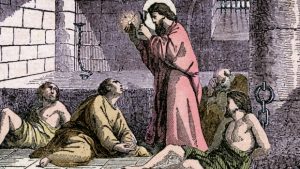
14th February has a long association with St. Valentine. Born in Terni, Italy, in the early 3rd century AD, Valentine was a Roman priest who suffered martyrdom at the hands of Emperor Clauduis II Gothicus. According to legend, St. Valentine signed a letter ‘from your Valentine’ to his jailer’s daughter whom he had befriended and healed of blindness before his death. The girl subsequently regained her sight to read the note. Nowadays Valentine’s Day is very much associated with love.
In the old Liturgical Calendar this Sunday was known as Quinquagesima (fifty days before the great festival). One of the readings set for the day was 1 Corinthians chapter 13, St Paul’s letter of love – ‘Love is patient. Love is kind. It always protects, always trusts, always hopes, always perseveres’.
In our current liturgy the Gospel reading today retells the story of the Transfiguration in Mark chapter 9 v. 2 – 9. This mysterious reading finds us all at a watershed moment as we prepare to revisit Jesus’ saving work through Lent, Passiontide and Easter. Moses and Elijah appear, referencing the past; Peter makes a characteristic ‘faux pas’ in wanting to preserve the present; and the Father’s voice looks to the future as we are told, ‘Listen to Him’.
As we begin the Interregnum this is a good time to look back at where God has led us thus far, to rejoice that God accepts us (faux pas and all), and to listen to our Saviour as we set our faces towards the future with love in our hearts.
John Marsden
(With thanks to Lucille Henderson for research about St Valentine)

In light of the current Tier 5 Lockdown, on the grounds of public safety, the church will remain temporarily closed whilst Tier 5 status prevails.
We will continue to review the position on a regular basis and also pay close attention to advice forthcoming from the Diocese of Sheffield, in deciding when it’s considered safe for collective worship to resume.
It is with sadness I have to advise you of this, but I’m sure you’ll agree that the safety of our worshipping community is paramount during these very difficult times.
The streaming of Morning Prayer and Sunday Communion will continue until 11 February, when Revd. Ali retires. Quite soon I will be able to advise you of the streaming arrangements which will take place following her retirement.
If you require any further information, please do let me know.
Phil Beavers
PCC Secretary
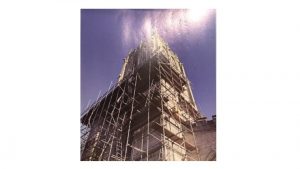
Scaffolding the 124-foot tower on all four sides is now complete, allowing the important conservation work to begin. This is a once in a lifetime project planned to finish in June. I can imagine you have been wondering what is happening as you see the scaffold head skyward; here is a brief summary of the work involved.
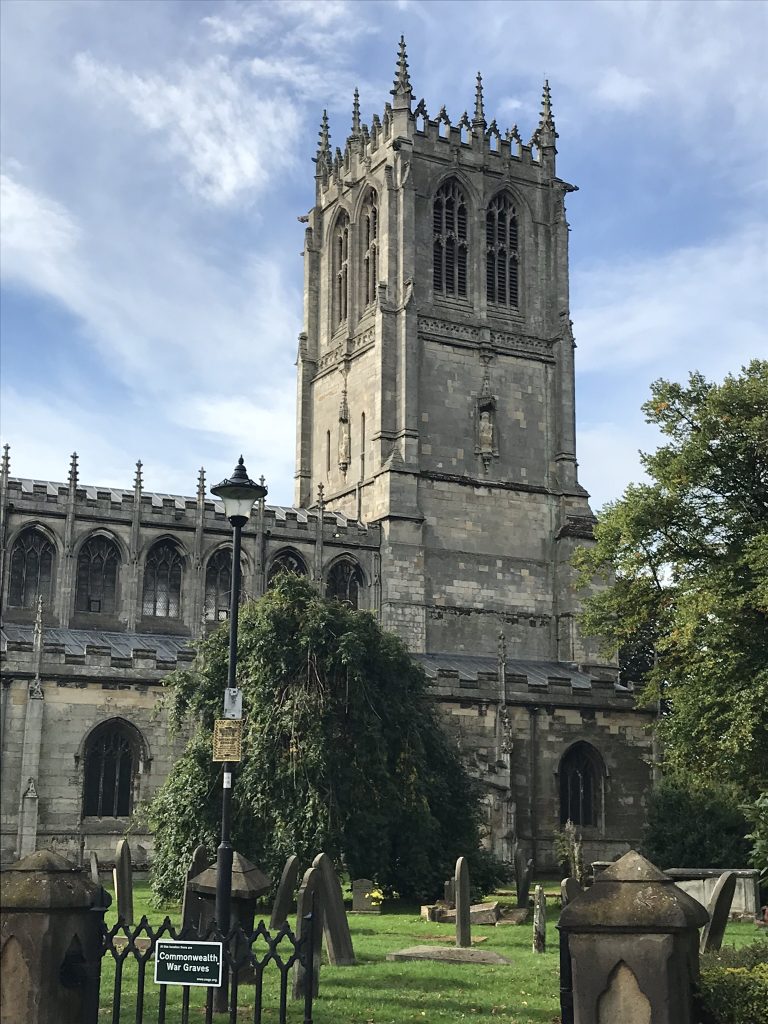
Most of the work is focussed on the bell chamber (or belfry), particularly the limestone traceries, these being the ornate stonework frames around the upper parts of louvred openings, which you can clearly see from ground level on all four sides, high in the tower. Some of this magnesian limestone will be removed, cleaned, re-pinned and reset, but where the weather has caused significant erosion, creating displacement risks, new locally quarried limestone is being cut and dressed as a full replacement. There are other areas of stonework to the external tower walls, again where climatic conditions have caused localised erosion and cracking, which are to be removed and replaced with new ashlar, finely dressed surface stone, to match that already in place.
The level of activity of conservators in and around the bell chamber makes it necessary to silence the bells, for both the hourly chime and the four-hourly carillon. There is a myriad of wires, cables, pulleys and springs which are carefully anchored across the whole of the bell chamber, necessary for the bells to be struck from the carillon. This complicated assembly, which is over 100 years old, is to be made secure before the internal work starts. Additionally, being in the bell chamber when the bells ring out is painfully noisy, with sound levels far too high to afford the conservators the level of safety they need. For these reasons the bells must remain silent for the length of this project.
I hope this gives you an insight of this important and necessary work which is currently being undertaken.
Phil Beavers
Chair
Fabric Committee.
© 2026 St Mary's Church Tickhill. Website Design and Build by Hildred Design